In plain words
Every sum, digit by digit. When the answer and the rods disagree, it says so, and that one line often says more than a mark would.
We restored numbers to their origins.
Long before they were marks on a page, numbers were things: pebbles in a hand, beads on a wire. Dunking Donuts is an embodied abacus in virtual reality, for anyone from ten who finds numbers hard to hold in their head, including players with dyscalculia. You jump and dunk donuts onto rods, and a number is again something you can see, carry and put down.
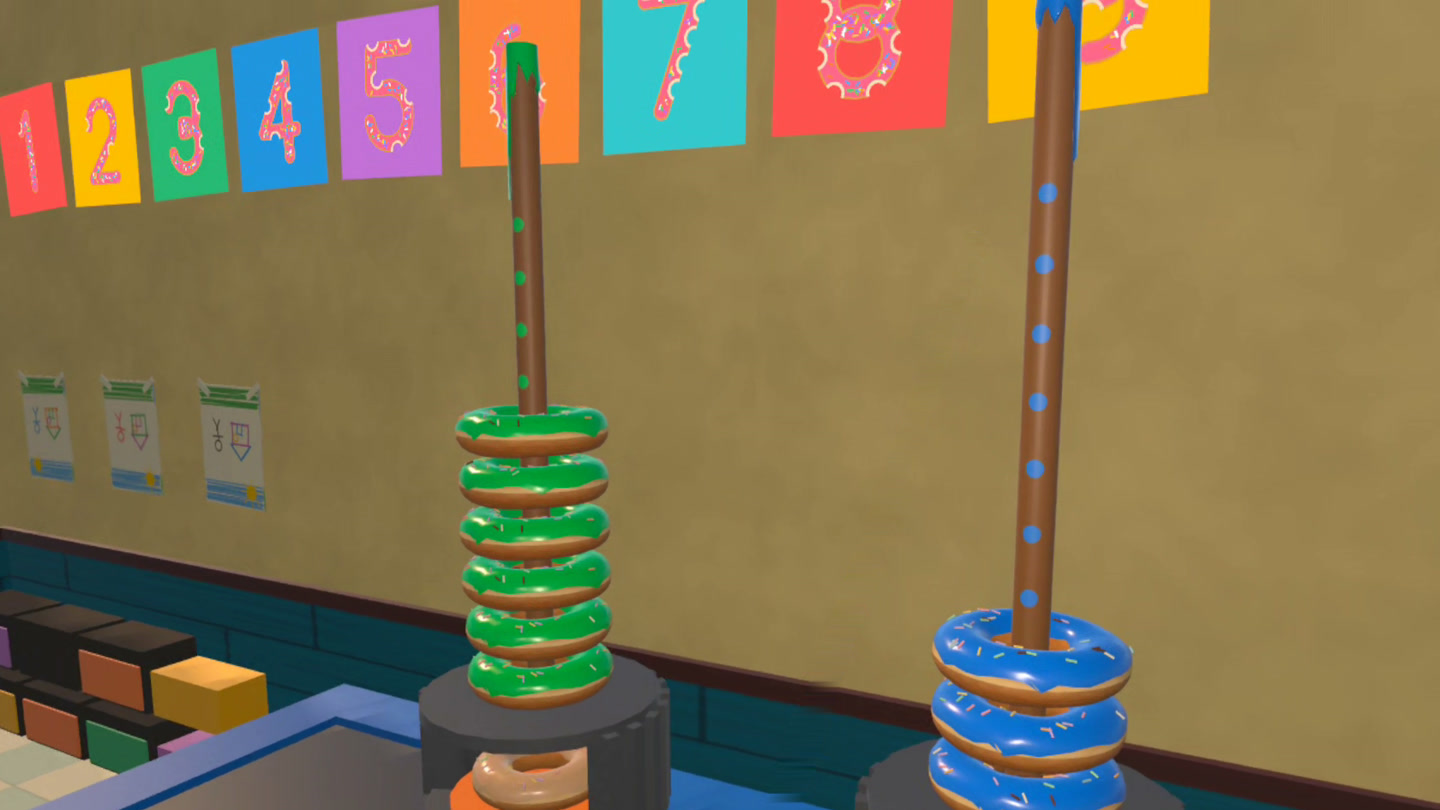
Two rods stand in front of the player: a green one for the tens, a blue one for the ones. The sum is on the board. Nothing counts for them and nothing marks them; they build the number with their own hands and read it off the rods.
38+25
Each rod has its own supply at its foot. The top of the rod sits just above your reach, measured for each player, so every donut goes on with a jump.
Every hole the donut passes leaves a donut behind. One, two, three, eight: the number grows under your hand, and you can see how big it is.
A rod holds ten and no more. When the ones rod is full, the player carries the ten over to the tens rod by hand, as on a real abacus. That is where carrying comes from.
Six green donuts on the tens rod, three blue ones on the ones rod. You can see 63 before anyone asks you to say it.
The answer is typed on the pad beside the board. The game does not mark it. The rods already showed it, and what was typed is kept for the people who guide the player.
=63six tens, three ones
The panel runs on a phone, a tablet or a laptop. You start every play from it, and afterwards it tells you what happened in plain words: not a mark, but what the rods showed, what was typed, and which digit went right or wrong. When an instructor guides the player, the exercises they give for home appear here too, ready to start.

Every sum, digit by digit. When the answer and the rods disagree, it says so, and that one line often says more than a mark would.

A set of sums given to do at home. You press Start, they put the headset on, and what came of it appears here when they are done.
For players from ten who find numbers hard to hold, including players with dyscalculia. A parent starts every play and stays nearby.
A Meta Quest headset, a clear space of about 2 by 2 metres, and a phone, a tablet or a laptop for the panel.
Trials with families in the Netherlands start soon. Be first to know.